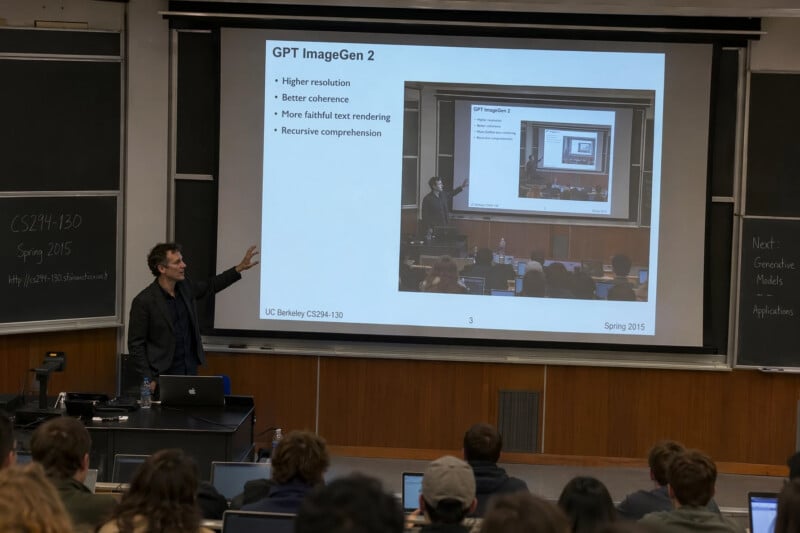
Seedream 5.0 Lite: ByteDance's Image Model That Actually Thinks
Most image generation models are good at one thing: turning text into pixels. You type a prompt, you get a picture. Sometimes it's great, sometimes the hands have seven fingers — but the fundamental loop hasn't changed much since DALL-E 2.
Seedream 5.0 Lite, released by ByteDance on February 13, 2026, breaks that loop. It doesn't just generate images — it reasons about them. And it can search the web in real time to make sure what it generates is actually current.
That's not an incremental upgrade. That's a different kind of tool.
What Makes Seedream 5.0 Lite Different
At its core, Seedream 5.0 Lite is a unified multimodal image generation model. But three capabilities set it apart from everything else on the market right now:
1. Multi-Step Visual Reasoning
This is the headline feature, and it's genuinely new. Previous models could interpret prompts. Seedream 5.0 Lite can think through visual problems.
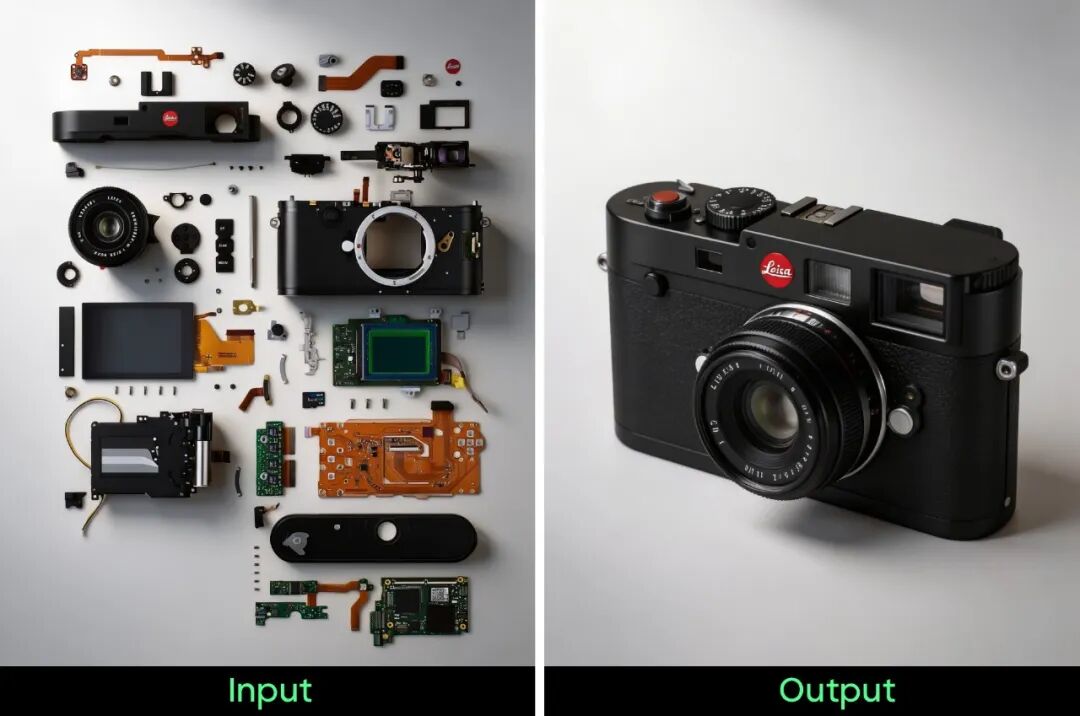
Give it scattered parts of an object, and it can figure out what the object is and assemble it correctly. Show it a Go board mid-game, and it can infer the next logical move and render the result. Ask it to "modify Figure 3 based on the changes from Figure 1 to Figure 2," and it understands the transformation pattern and applies it.
This isn't prompt engineering — it's visual reasoning. The model maintains an internal chain of thought about spatial relationships, physical laws, and logical sequences.
2. Real-Time Web Search
Seedream 5.0 Lite is currently the only image generation model that supports real-time web searching. When the search toggle is enabled, the model can access live data — weather conditions, stock prices, trending topics, box office numbers — and incorporate that information directly into generated images.
Want a poster showing today's actual gold price trend? A social media graphic with this week's real box office rankings? An infographic with current weather data? Seedream 5.0 Lite can pull that data and render it accurately, without you having to manually feed the numbers into your prompt.
When the search feature is disabled, the model behaves like a traditional image generator — stable and predictable.
3. Deep World Knowledge
The model's knowledge base spans technology, humanities, science, and culture. This translates to practical capabilities:
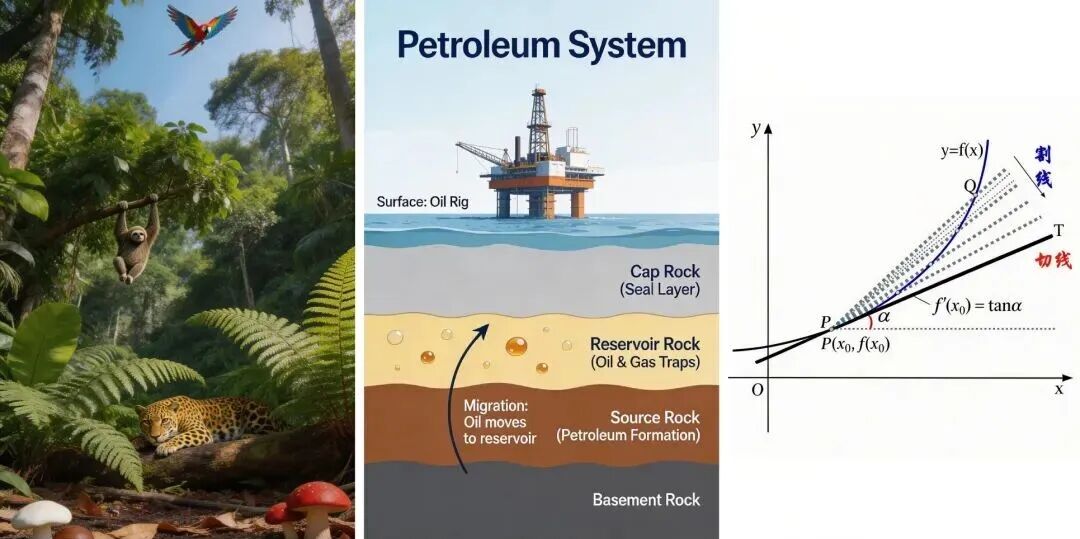
- Scientific visualization: Generate accurate tropical rainforest ecosystem diagrams, petroleum geological profiles, or mathematical derivative illustrations
- Information design: Create complex infographics that correctly represent data relationships
- Cultural accuracy: Render historically and culturally informed scenes without the anachronisms that plague other models
Performance: MagicBench & MagicArena Results
ByteDance evaluated Seedream 5.0 Lite using two internal benchmarks: MagicBench (a multi-dimensional evaluation framework) and MagicArena (a double-blind competitive platform where senior image-generation experts scored tens of thousands of rounds to build a high-confidence Elo leaderboard).
The results are clear. Seedream 5.0 Lite's Elo score significantly exceeds Seedream 4.5 across all tested dimensions:
| Dimension | Improvement vs 4.5 |
|---|---|
| Prompt following & alignment | Significant improvement — the model does what you actually asked for |
| Knowledge reasoning | Major gains — understands and depicts complex concepts accurately |
| Editing response & consistency | Strong uplift — maintains coherence across sequential edits |
| Office/study scenarios | Substantial improvement — business and educational content |
| Portrait enhancement | Notable gains — more natural, detailed human subjects |
| Creative arts | Improved — better artistic composition and style handling |
| Business marketing | Better — more production-ready commercial outputs |
| Design | Enhanced — stronger layout and visual hierarchy decisions |
The MagicBench radar charts tell the story visually:
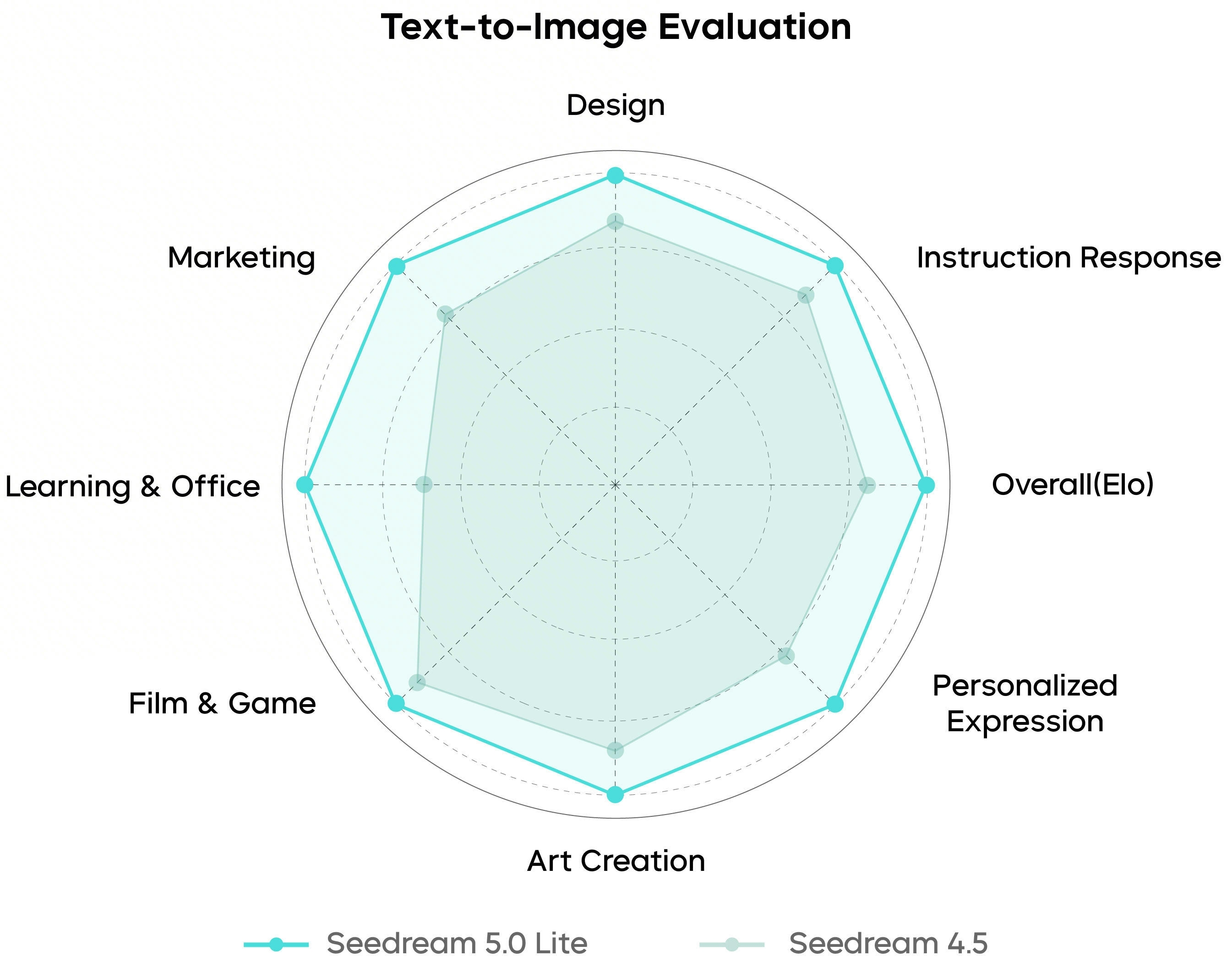
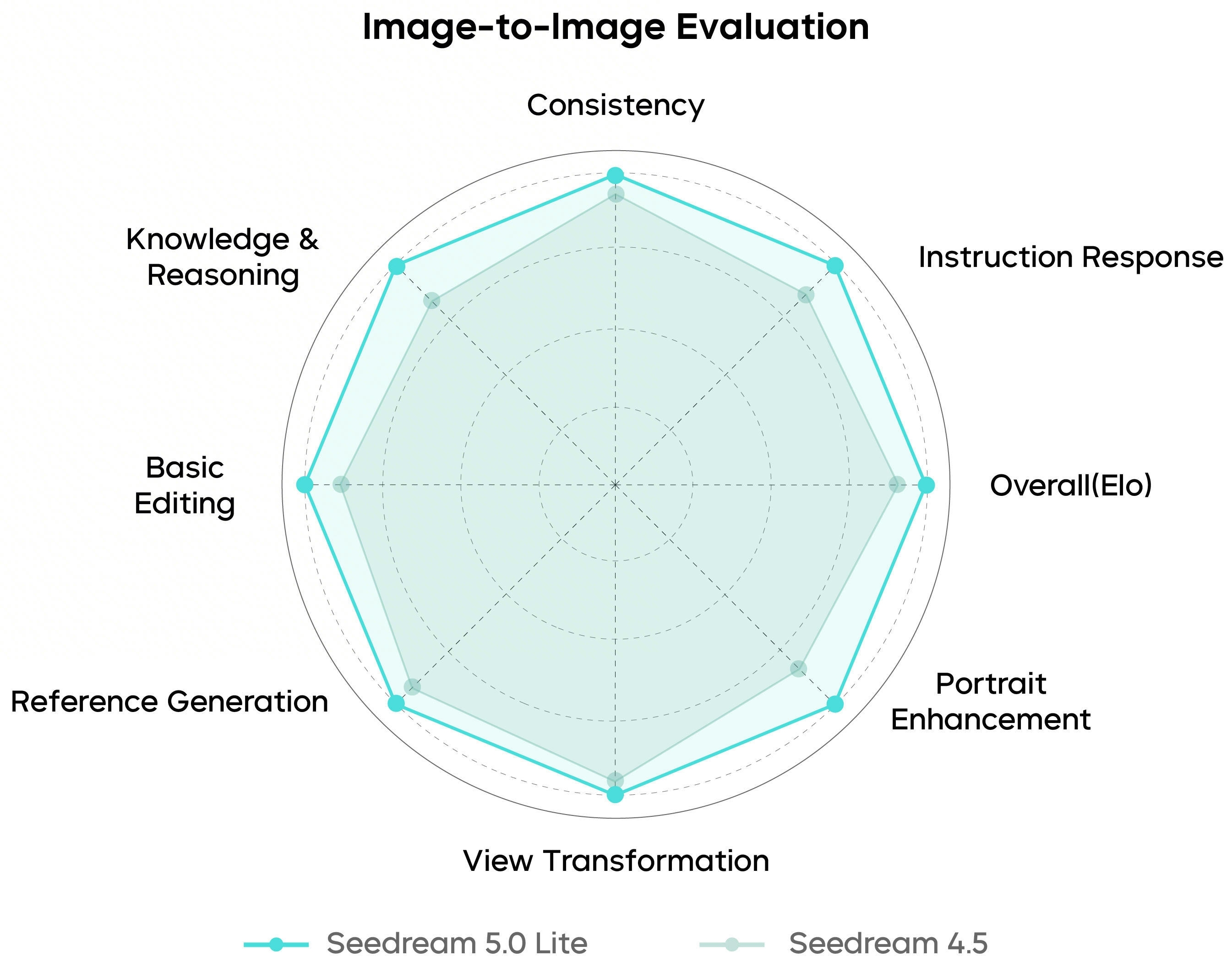
The evaluation methodology matters here. This wasn't a synthetic benchmark — it was thousands of blind comparisons judged by domain experts. The improvements in prompt following and alignment are particularly relevant for production workflows, where "do what I actually meant" is the difference between a useful tool and a frustrating one.
Source: Full benchmark details at seed.bytedance.com/en/seedream5_0_lite

The model also excels at complex multi-subject compositions — rendering nine subjects with specific attributes (letters, numbers, colors, timestamps) while following precise spatial instructions. This addresses one of the most persistent pain points in AI image generation: getting multiple elements to coexist correctly in a single frame.
Style Transfer Without the Hassle
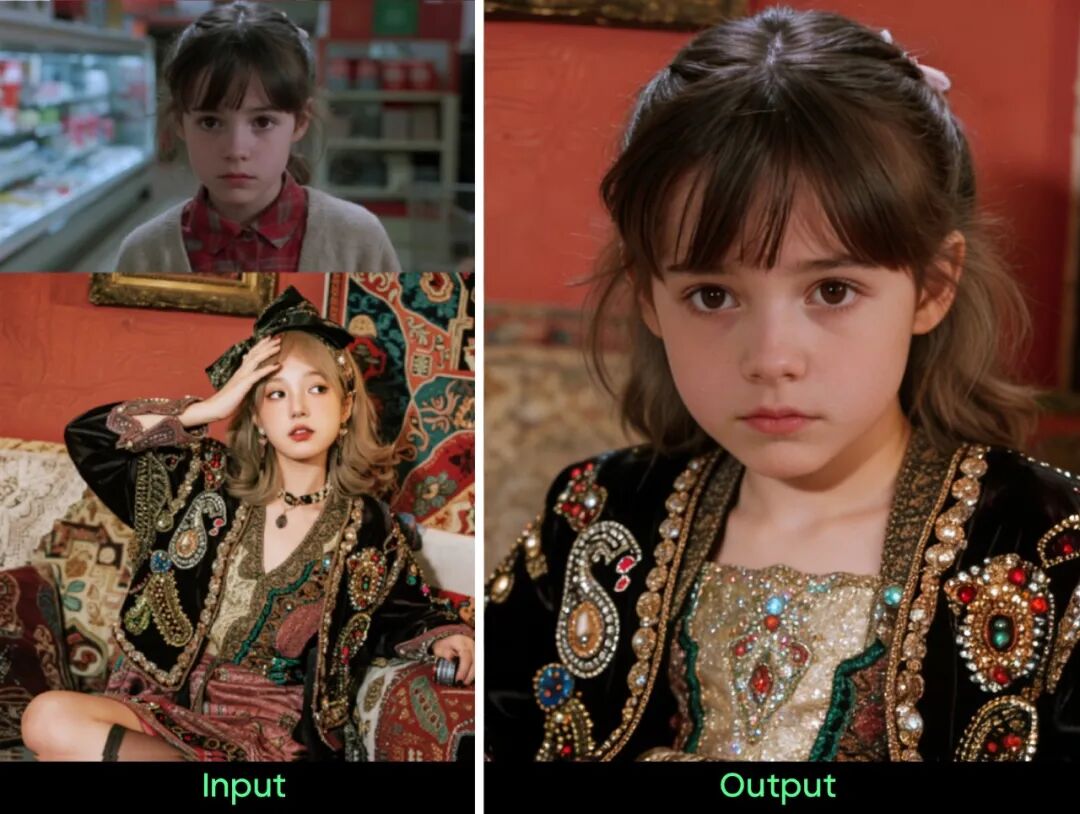
One of the more practically useful features: give Seedream 5.0 Lite a single reference image and it can extract and apply the artistic style without requiring elaborate prompts. Bohemian ornamentation, Impressionist textures, minimalist line art — the model captures the essence of a visual style from one example and applies it consistently.
For creative teams, this means faster iteration on brand-consistent content. Instead of spending 20 minutes crafting the perfect style prompt, you show the model what you want and let it figure out the parameters.
Advanced Image Editing
Where Seedream 5.0 Lite really shines for production work is its editing capabilities. The model can:
- Interpret vague editing instructions ("make it feel warmer," "add more drama to the sky") and produce coherent results
- Maintain consistency in non-edited areas during local modifications
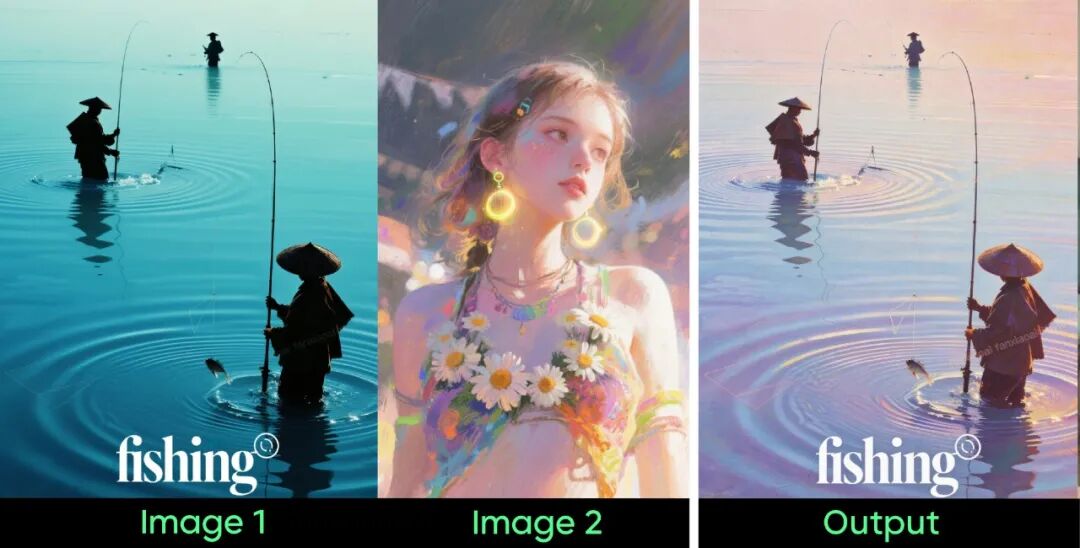
- Understand transformation patterns across multiple reference images
This approaches the kind of nuanced editing that previously required a human designer's judgment. It's not perfect — no model is — but it significantly reduces the back-and-forth cycles that eat up production time.
Try It Now on XainFlow
Seedream 5.0 Lite is already available on XainFlow. You can access it directly through our AI Suite alongside other leading models like GPT Image, Recraft, and FLUX.
Here's why that matters: instead of juggling multiple platforms and APIs to test different models, you can compare Seedream 5.0 Lite's output against other generators side by side, within the same workflow. Generate a concept with Seedream's visual reasoning, refine it with style transfer, and export it — all without leaving XainFlow.
Quick Start
- Open XainFlow and navigate to AI Suite → Image Generation
- Select Seedream 5.0 Lite from the model dropdown
- Enable Web Search if you need real-time data in your generation
- Write your prompt — the model handles complex multi-step instructions natively
- Use a reference image for style transfer if you want to match an existing visual direction
Seedream 5.0 Lite excels with detailed, descriptive prompts. Unlike simpler models, it actually uses the additional context to make better decisions about composition, lighting, and subject relationships.
What This Means for Creative Teams
The shift from "prompt → image" to "prompt → reasoning → image" is significant. It means:
- Less prompt engineering: The model understands intent, not just keywords
- More reliable complex scenes: Multi-subject compositions that actually work
- Real-time relevance: Content that's current without manual data entry
- Faster style consistency: One reference image replaces pages of style guides
- Smarter editing: Instructions that mirror how you'd brief a designer
For teams producing content at scale — social media, marketing campaigns, product visuals — Seedream 5.0 Lite reduces the friction between creative direction and final output. The model does more of the thinking, so your team can focus on the strategy.
The Bottom Line
Seedream 5.0 Lite isn't just another image model. It's a signal that AI image generation is evolving from pixel synthesis into visual intelligence. The combination of reasoning, real-time data, and deep world knowledge creates a tool that's genuinely useful for professional creative work — not just impressive demos.
Try it on XainFlow and see the difference for yourself.