Sora 2 Is Dead: What Happened and Where to Go Next
OpenAI officially shut down Sora on March 24, 2026. The standalone app, the Sora.com web experience, and the Sora 2 API are all being retired — just 23 months after the original Sora demo stunned the world and barely six months after Sora 2 launched as a consumer product. For creative teams and developers who built workflows around Sora's API, this isn't just news — it's a forced migration.
The Sora 2 model itself isn't disappearing entirely. It remains accessible through ChatGPT for Plus and Pro subscribers. But the dedicated app, the social sharing platform, and critically for production teams, the API endpoint are gone. You can still generate Sora-quality videos through ChatGPT's interface, but you cannot do so programmatically through your own applications.
Here's why it happened, what it means for the AI video landscape, and where to move your workflows next.
Why OpenAI Killed Sora: The Numbers Behind the Decision
Sora's failure wasn't a quality problem — the underlying model was genuinely impressive. It was a business problem. Three factors converged to make the standalone product unsustainable.
Engagement Collapsed After Launch Hype
When the Sora app launched in September 2025, it became the most downloaded app in the Photo & Video category on day one. But by January 2026, downloads had fallen 45%. The TikTok-style social feed that OpenAI built around it — where users could browse and share AI-generated clips — never became a daily habit.
The core issue: generating AI video is fascinating the first few times, but the novelty wears off fast when every clip lives on an AI-only feed with no organic audience.
GPU Economics Were Catastrophic
According to analysis by WentuoAI, Sora generated approximately $2.1 million in revenue while consuming GPU resources costing hundreds of millions annually. Video generation is compute-intensive by nature, and Sora's pricing never came close to covering the infrastructure costs.
OpenAI told employees that shutting down Sora would "free up compute resources for its next generation of models." The research team is pivoting to "world simulation research" in service of robotics — a domain where video understanding technology has clearer commercial applications.
The IP and Deepfake Problem
Sora launched as a social video app with deepfake capabilities that let users generate videos using their own likenesses. People immediately started generating videos of copyrighted characters, celebrities, and content that had no business existing. Disney terminated its content-sharing partnership with OpenAI following the shutdown announcement — a signal that even well-funded partnerships couldn't survive the reputational risk.
"We're saying goodbye to Sora. To everyone who created with Sora, shared it, and built community around it: thank you." — OpenAI announcement, March 24, 2026
What Exactly Is Being Shut Down (And What Remains)
This is where it gets nuanced. Here's the precise breakdown:
| Component | Status |
|---|---|
| Sora iOS app | Shutting down |
| Sora.com web experience | Shutting down |
Sora 2 API (/v1/videos endpoint) |
Shutting down (still documented but sunset imminent) |
| Sora 2 model via ChatGPT | Still available (Plus and Pro subscribers) |
| Sora 1 web (US) | Already removed (March 13, 2026) |
As of March 28, 2026, OpenAI's developer docs still list Sora-2 and Sora-2-Pro in the API. If your organization has active API access, verify your endpoints before panic-migrating — but plan for shutdown within weeks, not months.
For creative teams who relied on the API for programmatic video generation, the key takeaway is clear: Sora is no longer a viable foundation for production workflows. Even if the API technically works today, building on a deprecated platform is a risk no professional team should take.
The 5 Best Sora Alternatives for Creative Teams in 2026
The good news: the AI video generation landscape has matured significantly since Sora first launched. Several models now match or exceed Sora 2's capabilities in specific areas. Here's how they compare for production use.
1. Kling 3.0 — Best Overall Replacement
Kling 3.0 by Kuaishou addresses two of Sora's most significant limitations: duration and price. Where Sora capped clips at roughly 25 seconds, Kling generates up to two minutes — nearly five times longer — making it viable for product walkthroughs, training segments, and extended social content without external stitching.
Key strengths:
- Up to 2-minute video generation
- Strong motion coherence and physical accuracy
- Competitive API pricing
- Active development with regular model updates
Best for: Teams that need longer clips at production quality without breaking the budget.
For a deeper dive, check our complete guide to Kling 3.0.
2. Google Veo 3.1 — Best for Audio-Synced Video
Veo 3.1 is the most technically advanced video generation model currently available. Its standout feature: it generates synchronized audio — ambient sound, dialogue, and sound effects — directly alongside the video in a single pass. No other mainstream tool matches this capability.
Key strengths:
- Native audio generation (dialogue, SFX, ambient)
- Up to 4K resolution at 60fps
- Strong cinematic realism
- Google's infrastructure backing
Best for: Content that needs audio without post-production sound design — explainers, social content, rapid prototyping.
3. Seedance 2.0 — Best for Character Consistency
Seedance 2.0 by ByteDance has largely solved identity drift — the perennial AI video problem where faces and features shift between frames. Its "Identity Lock" feature maintains exact facial features across multiple scenes and camera angles.
Key strengths:
- Identity Lock for consistent characters
- Strong motion quality
- Competitive pricing
- ByteDance's massive training infrastructure
Best for: Narrative content, multi-scene campaigns, any project requiring consistent character appearance.
Read more about how Seedance is reshaping AI video in our Seedance 2.0 deep dive.
4. Runway Gen-4.5 — Best for Creative Control
For creators who used Sora primarily to generate high-quality visual scenes, Runway Gen-4.5 is the most direct replacement. It focuses heavily on cinematic quality and creative control, with tools to generate, edit, and refine videos in one workspace.
Key strengths:
- Fine-grained creative controls (camera movement, style, pacing)
- Built-in editing tools
- Established ecosystem and community
- Strong style consistency
Best for: Cinematic content, brand campaigns, teams that need precise creative direction over their outputs.
5. Pika 2.5 — Best for Social Media and Effects
Pika doesn't try to be a Hollywood film studio — it tries to be the most creative tool in your toolkit. While Sora focused on photorealism, Pika leans into "Pikaffects": physics-based animations like melting, crushing, inflating, and exploding objects. These are perfect for scroll-stopping social media content.
Key strengths:
- Unique physics-based effects (Pikaffects)
- Fast generation times
- Intuitive interface
- Great for short-form social content
Best for: Social media teams, content creators who need eye-catching effects, anyone making scroll-stopping hooks.
Model Comparison: Sora 2 vs. the Alternatives
| Feature | Sora 2 | Kling 3.0 | Veo 3.1 | Seedance 2.0 | Runway Gen-4.5 | Pika 2.5 |
|---|---|---|---|---|---|---|
| Max Duration | ~25s | 2 min | 30s | 30s | 20s | 15s |
| Max Resolution | 1080p | 1080p | 4K | 1080p | 1080p | 1080p |
| Native Audio | No | No | Yes | No | No | No |
| Character Lock | Limited | Good | Good | Excellent | Good | Fair |
| API Available | Deprecated | Yes | Yes | Yes | Yes | Yes |
| Creative Controls | Medium | Medium | Medium | Medium | High | High |
Don't limit yourself to a single model. The best creative workflows in 2026 use multiple models for different strengths — Kling for long-form, Veo for audio, Seedance for character work, Runway for cinematic polish.
What This Means for the AI Video Industry
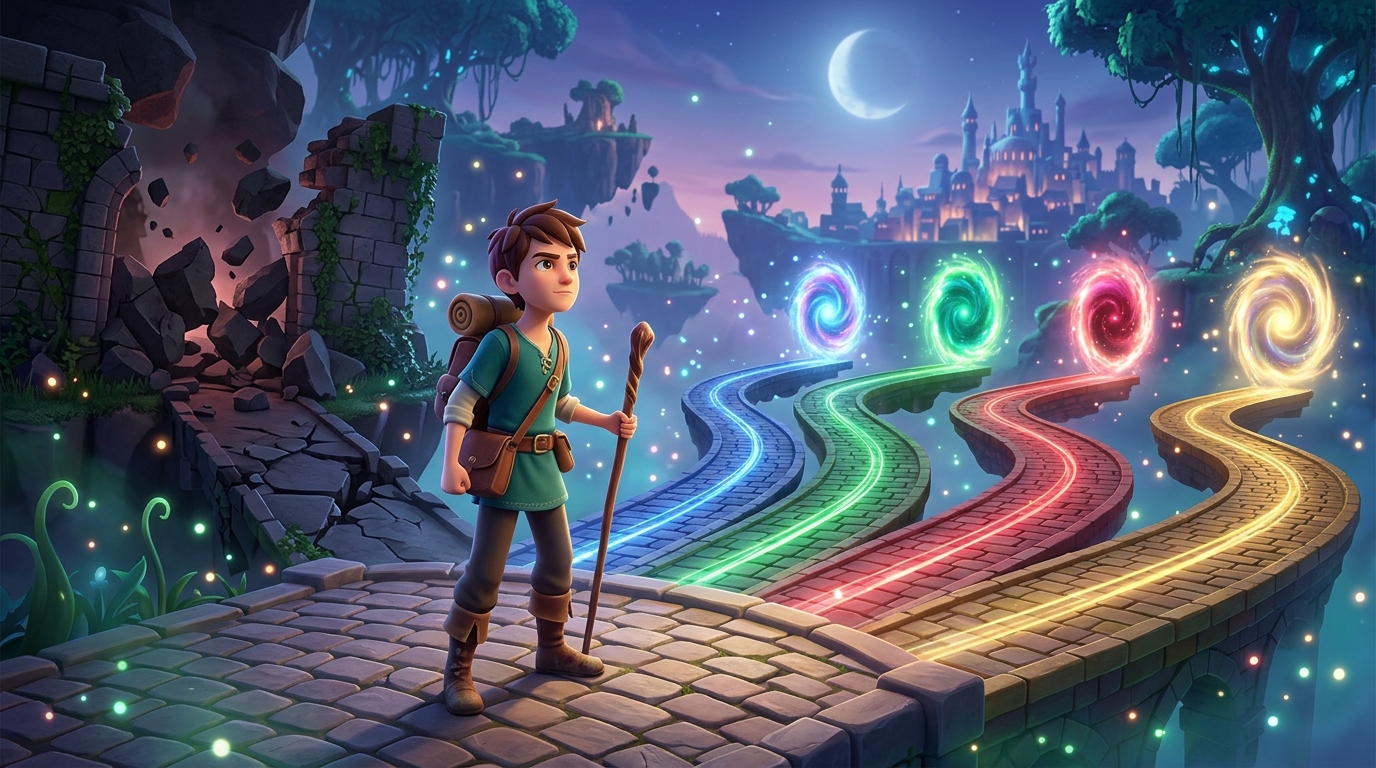
Sora's shutdown isn't a signal that AI video generation is failing — it's a signal that the market is maturing. Three trends are emerging from the aftermath:
1. Standalone AI Apps Are a Hard Business
OpenAI learned what many AI startups already knew: generating curiosity is easy, building daily habits is hard. The TikTok-style social layer never gained traction because AI-generated content exists in an uncanny valley of engagement — interesting enough to watch once, not compelling enough to return to daily.
The winners in AI video aren't building social apps. They're building infrastructure and APIs that integrate into existing creative workflows.
2. Multi-Model Workflows Are the Future
No single model does everything well. The post-Sora landscape favors platforms that can orchestrate multiple models — using Kling for one shot, Seedance for another, and Runway for the final edit — rather than forcing teams to choose one tool and hope it handles every use case.
This is exactly the approach behind platforms like XainFlow, where you can access Sora 2 (while it lasts), Kling 3.0, Seedance 2.0, Veo 3.1, and other models through a single workflow canvas, switching between them based on each shot's requirements.
3. API Stability Matters More Than Model Quality
Sora 2 was arguably one of the best video generation models available. It didn't matter — because the API is being shut down. For production teams, the lesson is clear: model quality is necessary but not sufficient. API reliability, vendor stability, and multi-model flexibility are equally important.
"While big tech consolidates, indie tools are stepping up with unrestricted access, faster performance, and creator-first pricing."
Migration Checklist: Moving Off Sora 2
If your team currently relies on Sora's API, here's a practical migration plan:
- Audit your current usage — Document which workflows depend on the Sora API, what parameters you use, and your monthly volume
- Archive your outputs — Export any Sora-generated content you want to keep before the shutdown completes
- Test alternatives — Run your most common prompts through Kling 3.0, Veo 3.1, and Seedance 2.0 to compare quality
- Update your API integrations — Most alternatives use similar REST API patterns, but parameter names and response formats differ
- Consider a multi-model platform — Rather than migrating from one single vendor to another, use a workflow platform that abstracts the model layer
OpenAI has promised to "share more soon, including timelines for the app and API and details on preserving your work." Don't wait for the final deadline — start migrating now while you have time to test thoroughly.
The Bottom Line
Sora 2's shutdown is a wake-up call for any creative team that built workflows around a single AI vendor. The model was excellent, but the business wasn't sustainable — $2.1M in revenue against hundreds of millions in GPU costs doesn't work at any scale.
The good news: the alternatives are not only viable, they're better in specific ways. Kling gives you longer clips. Veo gives you native audio. Seedance gives you character consistency. Runway gives you creative control. And multi-model platforms give you the flexibility to use each model's strengths without vendor lock-in.
The era of "one model to rule them all" is over. The era of intelligent model orchestration has begun.
For a comprehensive comparison of all the leading models, check our definitive guide to AI video generators in 2026.