NVIDIA GTC 2026: What Agentic AI Means for Creative Teams
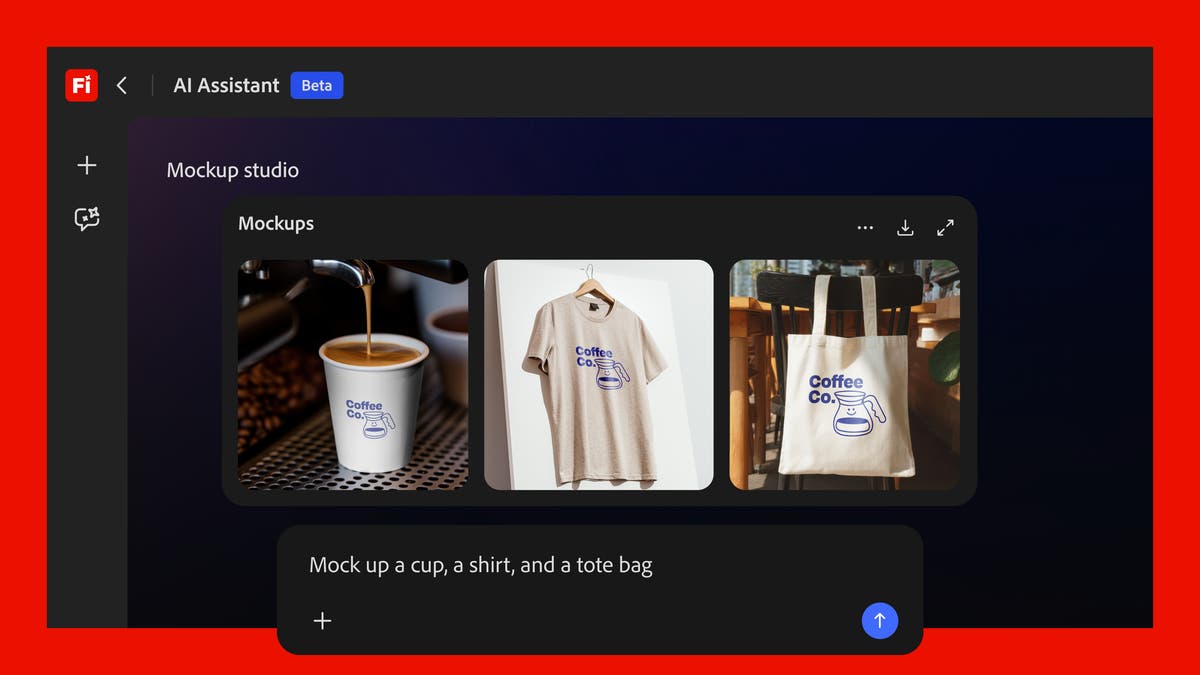
NVIDIA GTC 2026 made one thing clear: the era of prompt-and-pray AI is over. The conference's dominant theme was agentic AI — autonomous systems that don't just respond to single prompts but plan, execute, and iterate across multi-step workflows without human intervention at every stage. For creative teams, this isn't abstract infrastructure news. Adobe and NVIDIA announced a strategic partnership to build agentic creative and marketing workflows on NVIDIA's open Agent Toolkit, and Picsart launched an AI agent marketplace where creators can "hire" specialized assistants. The shift from chatbot to co-worker is happening now.
This article breaks down the key GTC 2026 announcements that matter for creative agencies, marketing teams, and content producers — what changed, why it matters, and how to position your team for the agentic era.
The Agentic AI Shift: From Prompt to Pipeline
The biggest conceptual shift at GTC 2026 wasn't a new chip or model — it was a change in how AI is deployed. Jensen Huang described the transition from "call-and-answer chatbots" to "task-oriented AI agents" that can autonomously determine how to complete assigned tasks.
What does "agentic" actually mean for creative work? Here's the difference:
| Traditional AI Workflow | Agentic AI Workflow |
|---|---|
| Human writes prompt | Agent receives a goal |
| AI generates one output | Agent plans multi-step execution |
| Human reviews, re-prompts | Agent iterates, self-corrects |
| One tool at a time | Agent orchestrates multiple tools |
| Session-based (start over each time) | Persistent (remembers context, learns) |
In practice, this means an AI agent could receive a brief like "create a social media campaign for our spring product launch" and autonomously research brand guidelines, generate image variations, resize for each platform, write copy, schedule posts, and flag anything that needs human approval — all without individual prompts for each step.
"Content creation is exploding, and our partnership with NVIDIA is grounded in a shared vision to reinvent creative and marketing workflows with AI." — Shantanu Narayen, Adobe CEO
NVIDIA Agent Toolkit: The Open Platform Behind It All
At the center of GTC's agentic push is NVIDIA Agent Toolkit, an open-source platform for building autonomous AI agents. Unlike proprietary solutions locked to a single vendor, Agent Toolkit provides modular components that any organization can assemble:
Key Components
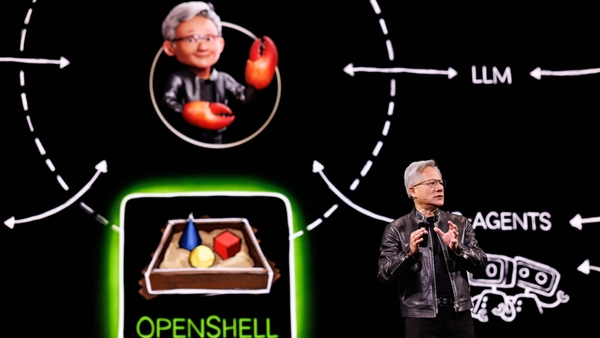
- NVIDIA OpenShell: An open-source runtime that enforces policy-based security, network, and privacy guardrails for agent deployment. Agents operate within defined boundaries — they can't go rogue.
- NVIDIA Nemotron: Open models that power agent reasoning. The AI-Q Blueprint using Nemotron achieved top benchmark rankings while cutting query costs by more than 50%.
- NVIDIA AI-Q: An agent blueprint enabling AI to "perceive, reason and act on enterprise knowledge" — connecting agents to internal databases, documents, and tools.
- NemoClaw: A security stack combining policy enforcement, network guardrails, and privacy routing. It's the layer that makes autonomous agents safe enough for enterprise deployment.
Why Open Source Matters for Creative Teams
The open-source approach means creative tool vendors aren't locked into one ecosystem. Any platform — whether it's Adobe, Picsart, or a specialized workflow tool — can build on Agent Toolkit. This prevents vendor lock-in and ensures agents can work across your entire tool stack, not just within a single app.
The related open-source project OpenClaw surpassed 100,000 GitHub stars in its first week with 2 million visitors, signaling massive developer interest in building autonomous agents.
If your team builds custom automation (scripts, Zapier flows, n8n workflows), Agent Toolkit represents the next evolution — agents that don't just follow preset rules but adapt their approach based on context and outcomes.
Adobe × NVIDIA: Agentic Creative Workflows
The most directly relevant announcement for creative teams was the Adobe-NVIDIA strategic partnership, announced during the GTC keynote. This isn't a vague "we're exploring AI together" statement — it covers specific technologies and use cases:
What They're Building
Next-generation Firefly models — Adobe's Firefly image and video models will be built on NVIDIA's CUDA-X, NeMo libraries, and Cosmos open models for "best-in-class creative precision and control."
Agentic creative workflows — Adobe will integrate NVIDIA Agent Toolkit and Nemotron models to power long-running, autonomous creative agents across Photoshop, Premiere Pro, Frame.io, and GenStudio.
3D digital twin marketing — A cloud-native solution combining NVIDIA Omniverse with OpenUSD standards to create virtual product replicas for pack shots, lifestyle imagery, and virtual try-ons — all preserving brand identity.
Firefly Foundry — Enterprise-grade custom AI with agentic capabilities, letting agencies train custom models and deploy agents that use them consistently across campaigns.
What This Looks Like in Practice
Imagine an agency managing a product launch for a consumer brand. Instead of:
- A designer manually creating 50 ad variations in Photoshop
- An editor cutting 12 video formats in Premiere Pro
- A producer coordinating asset delivery through email chains
An agentic workflow could:
- Receive the campaign brief and brand guidelines
- Generate image variations using a custom Firefly model trained on the brand's style
- Automatically resize and adapt for each platform's specifications
- Cut video edits following the brand's motion guidelines
- Route everything through Frame.io for approval with contextual notes
The human role shifts from execution to creative direction and approval — the "10x creative team" becomes achievable not through hiring but through agent orchestration.
For a deeper look at how Adobe's Firefly ecosystem is evolving, check out our recent analysis of Adobe Firefly Custom Models and brand-consistent AI generation.
Picsart's AI Agent Marketplace: Agents You Can "Hire"
While Adobe and NVIDIA build the infrastructure layer, Picsart launched a consumer-facing example of what agentic AI looks like in practice. Their AI agent marketplace — launched March 16, the same week as GTC — lets creators "hire" specialized AI assistants for specific tasks.
Available Agents
| Agent | What It Does | Key Feature |
|---|---|---|
| Flair | Analyzes Shopify stores and suggests product photo improvements | Integrates directly with your e-commerce catalog |
| Resize Pro | Resizes images/videos for platform-specific dimensions | AI extends frames when aspect ratios don't match |
| Remix | Applies visual styles ("vintage film," "cyberpunk," "watercolor") across libraries | Batch processing for entire asset collections |
| Swap | Changes photo backgrounds in bulk | Maintains subject quality while replacing environments |
Key Design Decisions
Two details stand out from Picsart's approach:
Autonomy levels: Users can set how independently agents operate. The Flair agent, for example, can be configured to require creator approval before taking any action — or to operate autonomously within defined parameters. This slider between "assistant" and "autopilot" is likely how all creative AI agents will work.
Messaging integration: Agents are accessible through WhatsApp and Telegram via Picsart's API. This signals that agentic AI won't live only inside desktop apps — it'll meet creators wherever they communicate.
With 130 million users (skewing Gen Z), Picsart's marketplace is an early indicator of how the next generation of creators expects to interact with AI: not through prompts, but through delegation.
The Hardware Foundation: Why It Matters
GTC 2026 also introduced NVIDIA's Vera Rubin platform — seven chips, five rack-scale systems, and one supercomputer designed specifically for agentic AI workloads. While creative teams won't buy server racks, the hardware improvements directly affect the tools they use:
What Vera Rubin Means for Creative Tools
- 3–4x compute density over Blackwell means AI agents can run more complex multi-step workflows in the same time window
- Reduced inference costs make it economically viable to have agents running continuously, not just on-demand
- 1 million+ GPU deployments across AWS, Azure, and other clouds ensure agentic workflows scale globally
Jensen Huang projected $1 trillion in computing revenue from 2025 through 2027, driven by what he described as "off the charts" demand for AI compute. The infrastructure investment is real, and creative AI tools will ride that wave.
Multi-step agents that call models repeatedly benefit from every speed improvement. Latency reductions compound across 40–50 calls per task, turning a 10-minute agent workflow into a 2-minute one with each hardware generation.
What Creative Teams Should Do Now
The transition from prompt-based AI to agentic workflows won't happen overnight, but teams that prepare now will have a significant advantage. Here's a practical roadmap:
1. Audit Your Repetitive Workflows
Identify tasks that follow predictable patterns and currently require manual coordination:
- Asset resizing and reformatting across platforms
- Brand guideline enforcement across deliverables
- Content localization and adaptation
- Review and approval routing
These are the first candidates for agentic automation.
2. Standardize Your Brand Assets
Agentic AI works best when it has clear guardrails. Document your:
- Brand style guides in machine-readable formats
- Approved color palettes, fonts, and visual motifs
- Content tone and messaging frameworks
- Approval workflows and escalation criteria
The more structured your brand guidelines, the more effectively agents can enforce them.
3. Evaluate Platform Readiness
Not every tool in your stack will support agentic workflows immediately. Assess:
- Which tools are integrating NVIDIA Agent Toolkit or similar frameworks?
- Does your DAM (digital asset management) system have API access for agents?
- Can your project management tools receive automated updates?
The SaaS landscape is rapidly restructuring around agentic capabilities — as we explored in The SaaS-pocalypse: How AI Agents Are Reshaping Software.
4. Define Human-in-the-Loop Boundaries
Decide now which creative decisions require human judgment and which can be delegated:
| Delegate to Agents | Keep Human |
|---|---|
| Asset resizing/reformatting | Brand strategy and positioning |
| A/B variant generation | Final creative approval |
| Metadata and tagging | Narrative and storytelling direction |
| Platform-specific adaptation | Client relationship management |
| Quality checks against guidelines | Novel creative concepts |
5. Start Small with Existing Tools
You don't need to wait for full agentic platforms. Current tools already support basic autonomous workflows:
- Set up automated pipelines that chain multiple AI operations
- Use workflow automation to connect your AI tools with project management
- Build templates that agents can execute consistently
For a step-by-step guide on building automated creative pipelines, see our AI Workflow Automation Guide for Creative Agencies.
The Bigger Picture: AI as Operating System
GTC 2026 revealed something larger than any single product announcement. AI is transitioning from a feature inside applications to an operating layer that sits above them. NVIDIA's Agent Toolkit doesn't just work with Adobe — it's being adopted by Atlassian, Salesforce, ServiceNow, SAP, and Box. The agentic paradigm will eventually connect every tool in your stack through a shared AI coordination layer.
For creative teams, this means:
- The competitive advantage shifts from who has the best individual AI tools to who has the best-orchestrated AI workflows
- Team structures evolve from specialists executing tasks to directors overseeing agent fleets
- The creative brief becomes code — structured inputs that agents can parse, execute, and optimize
"For more than 20 years, NVIDIA and Adobe have partnered to push the boundaries of design and creativity." — Jensen Huang, NVIDIA CEO
The next 12 months will likely see the first production-grade agentic creative workflows deployed at major agencies. The question isn't whether this shift will happen — it's whether your team will be leading it or catching up.
Explore Agentic Workflows Today
The tools for building autonomous creative pipelines already exist. Platforms like XainFlow let you chain AI models into multi-step workflows — from image generation to video production to brand-consistent asset delivery — giving your team a head start on the agentic era.