AEO in 2026: How to Make AI Search Engines Cite Your Brand
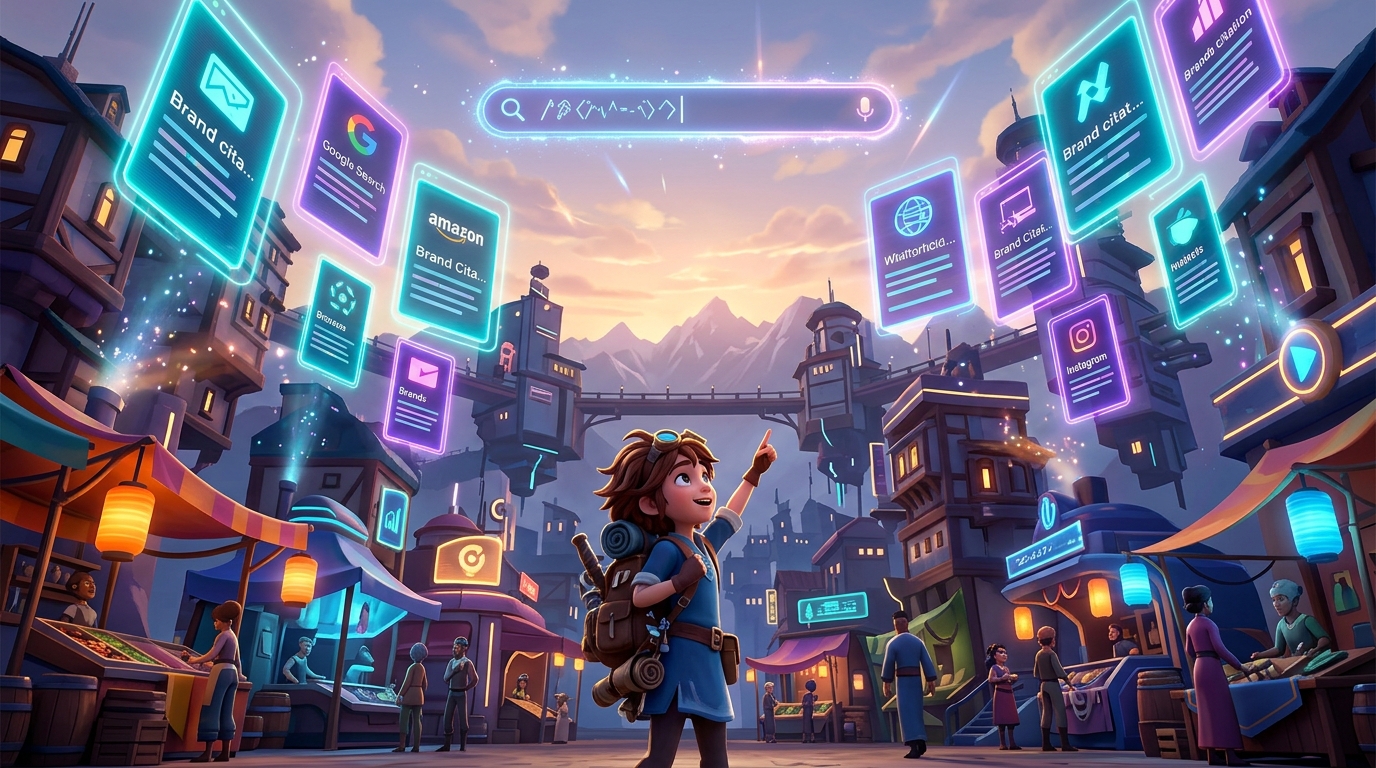
Answer Engine Optimization (AEO) is the practice of structuring your content so that AI-powered search platforms — ChatGPT, Google AI Overviews, Perplexity, Claude, and Copilot — discover, cite, and recommend your brand when answering user queries. In 2026, this is no longer optional. Google AI Overviews now reach over 1.5 billion users monthly and appear in more than 50% of all searches. ChatGPT processes 2.5 billion prompts daily across 800 million weekly users. AI-driven referrals to websites surged more than tenfold between mid-2024 and early 2025. And the data is unequivocal: LLM-referred traffic converts 4.4x better than traditional organic search. If your brand is not being cited by AI answer engines, you are losing revenue to competitors who are.
This guide covers exactly what AEO is, why it matters more than traditional SEO for brand visibility, and a complete framework for making AI search engines cite your content — with specific data, actionable tactics, and real benchmarks from Q1 2026.
What Is AEO and Why It Changes Everything
Traditional SEO optimized your content for ten blue links. AEO optimizes your content for AI-generated answers. The difference is structural: instead of ranking on a results page, your brand gets directly cited — or it does not exist in the user's answer.
The terminology landscape includes several overlapping terms:
| Term | Full Name | Focus |
|---|---|---|
| AEO | Answer Engine Optimization | Being cited by AI answer engines (ChatGPT, Perplexity, Copilot) |
| GEO | Generative Engine Optimization | Broader term covering all generative AI search surfaces |
| AIEO | AI Engine Optimization | Emerging umbrella term for all AI search optimization |
| AAO | Assistive Agent Optimization | Newest evolution — optimizing for AI agents that take action |
The practical strategies overlap significantly. Throughout this article, we use AEO as the primary term, but the tactics apply across all AI search surfaces.
The Numbers That Should Wake You Up
Here is why AEO deserves immediate attention from every marketing and content team:
- 93% of AI Mode searches end without a click — users get their answer from the AI response itself, compared to 43% for traditional AI Overviews
- AI Overviews reduce clicks by 58% — organic CTR dropped 61% year-over-year for queries where AI Overviews appear
- Only 2-7 domains get cited in a single AI response, versus ten positions in traditional search
- LLM traffic converts 4.4x better than organic search — ChatGPT referrals convert at 15.9%, compared to Google organic's 1.76%
- AI referral traffic grew 527% year-over-year, even as traditional organic traffic remains flat
- Brands are cited 6.5x more often through third-party sources than through their own domains
"The competition is no longer for ten blue links. It is for two to seven citation slots in an AI-generated answer. If your content is not structured for extraction, you are invisible."
How AI Search Engines Choose What to Cite
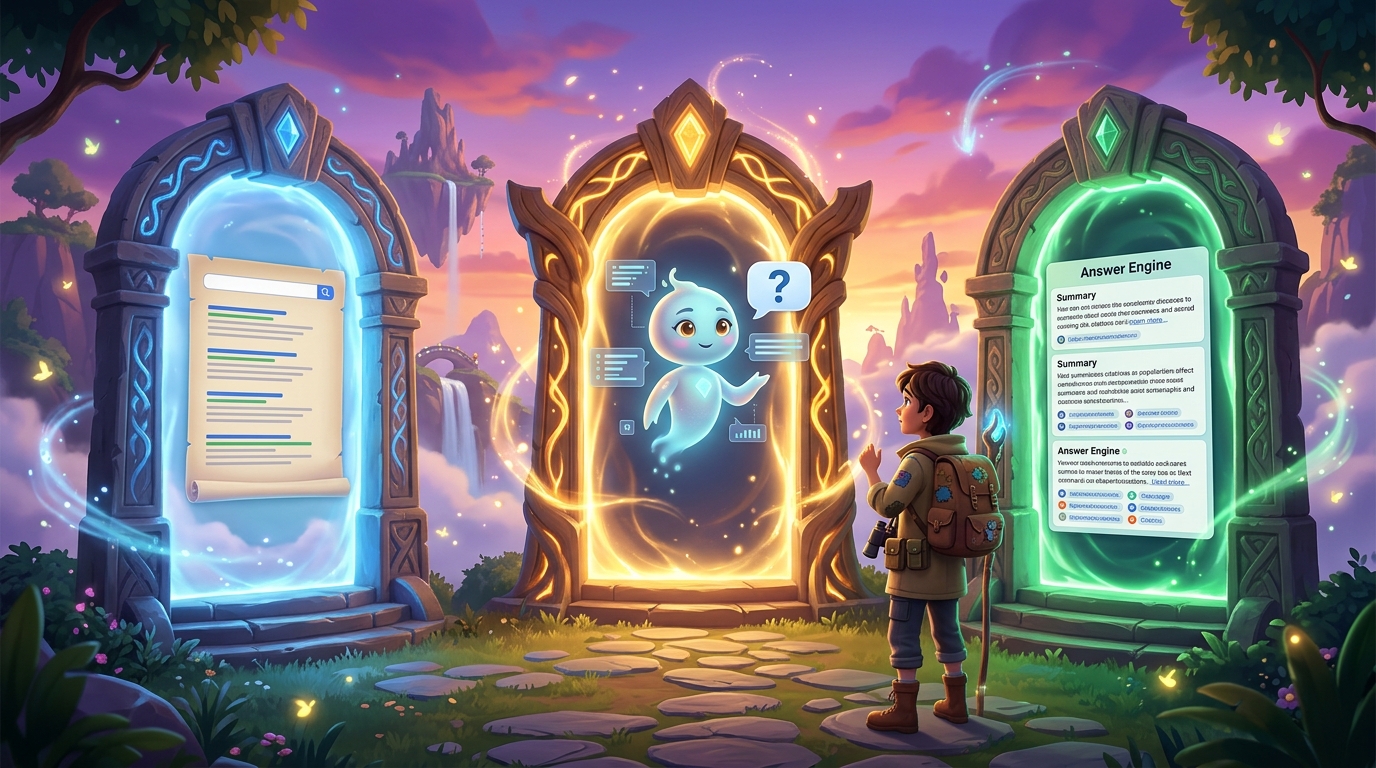
Understanding citation mechanics is the foundation of any AEO strategy. Each major platform works differently.
Google AI Overviews
Google AI Overviews correlate most strongly with traditional rankings. 76.1% of URLs cited in AI Overviews also rank in the top 10 of Google search results. This means existing SEO authority transfers partially — but not completely.
Key data points:
- Average AI Overview contains 13.3 source links
- Appears in 99.9% of informational keywords
- Only 1% of users click links within AI Overviews
- Science (43.6%), Health (43.0%), and Pets (36.8%) have the highest AI Overview share
- Shopping (3.2%) and Real Estate (5.8%) have the lowest
ChatGPT Search
ChatGPT is the most disruptive player because it cites fundamentally different sources than Google:
- 90% of ChatGPT citations come from pages ranking position 21+ — not the top 10
- 28.3% of ChatGPT's most-cited pages have zero organic visibility in traditional search
- Only 10% short-tail query overlap with Google SERPs
- Most cited page types: Wikipedia (29.7%), Homepages (23.8%), Educational content (19.4%)
- "Best X" listicles are the most cited format — 43.8% of cited page types
- Sites with 32K+ referring domains are 3.5x more likely to be cited
ChatGPT relies on Bing's Search API 92% of the time for retrieval. Optimizing for Bing — through Bing Webmaster Tools, IndexNow, and Bing-specific structured data — directly improves your ChatGPT citation rate.
Perplexity
Perplexity rewards freshness most heavily of all platforms:
- 50% of Perplexity citations come from content published in 2025 alone
- Content updated within 3 months averages 6 citations vs. 3.6 for older content
- Only 11% of domains are cited by both ChatGPT and Perplexity — these are entirely different ecosystems
What This Means for Your Strategy
The fragmented citation landscape means you need a cross-platform approach. A page that ranks #1 on Google may never appear in ChatGPT. Content that Perplexity loves may be too fresh for ChatGPT's training data. The only universal factor is content quality, structure, and authority.
The AEO Framework: 7 Strategies That Get You Cited
Based on research from Princeton, Georgia Tech, and IIT Delhi's foundational GEO study, combined with 2026 practitioner data, here are the seven strategies that measurably increase AI citations.
1. Lead With Direct Answers
AI systems that use real-time retrieval evaluate a page's relevance primarily on its opening content. The first 200 words must directly and completely answer the primary query.
44.2% of all LLM citations come from the first 30% of a page's text. This means your introduction is not a warm-up — it is your entire pitch to the AI engine.
Structure every page with:
- A 30-60 word direct answer to the core question in the first paragraph
- 2-3 atomic paragraphs expanding with data and context
- Then the deep dive
Bad example:
"In today's rapidly evolving digital landscape, many businesses are wondering about the future of search..."
Good example:
"Answer Engine Optimization (AEO) is the practice of structuring content to be cited by AI search engines like ChatGPT, Perplexity, and Google AI Overviews. In 2026, AI-referred traffic converts 4.4x better than organic search, making AEO the highest-ROI content strategy for B2B and B2C brands."
2. Structure Content for AI Extraction
AI engines parse content hierarchically. Clean structure directly increases citation probability.

Specific formatting rules:
- 120-180 words between headings — pages using this density receive 70% more citations
- Articles 2,900+ words average 5.1 citations vs. 3.2 for under 800 words
- Use H2 for main topics, H3 for subtopics — clean hierarchy helps AI identify which section answers which question
- Include FAQ sections — AI engines rely heavily on clear question-and-answer pairs
- Use tables for comparisons — structured data is easier for AI to extract and cite
- Bold key phrases that could become AI snippets
3. Build Entity Authority
AI engines do not just evaluate pages — they evaluate entities (brands, people, organizations). The stronger your entity recognition, the more likely you are to be cited.
Tactical steps:
- Maintain consistent brand mentions across the web — same name, same description, everywhere
- Develop detailed About and author bio pages with credentials
- Pursue Wikipedia presence when appropriate — Wikipedia is cited 7.8% of the time by ChatGPT, the highest of any single source
- Actively manage knowledge panels in Google
- Build presence on review platforms — a 10% increase in G2 reviews yields a 2% increase in AI citations
- Domains with Quora/Reddit mentions are 4x more likely to be cited by ChatGPT
4. Implement Schema Markup (Triple Stack)
Structured data is non-negotiable for AEO. Pages with the full triple schema stack receive 1.8x more citations than pages with Article schema alone.
The triple stack:
- Article/BlogPosting schema — title, author, datePublished, dateModified
- Organization schema — name, logo, sameAs (link all social profiles)
- FAQ or HowTo schema — structured Q&A or step-by-step content
Additional high-impact schemas:
- Breadcrumb for navigation context
- Speakable for voice-search readiness
- Product/Review for commercial content
5. Earn Third-Party Citations
This is the most counterintuitive AEO insight: brands are cited 6.5x more often through third-party sources than through their own domains. AI engines strongly favor earned media — authoritative third-party mentions — over brand-owned content.
This elevates three tactics:
- Digital PR — getting featured in authoritative publications
- Thought leadership — guest posts, podcast appearances, conference talks
- Industry reports — publishing original research that others cite
YouTube mentions and branded web mentions are the top two factors for AI brand visibility. If your executives are not creating content on YouTube and appearing on industry podcasts, your AEO strategy has a ceiling.
6. Maintain Freshness
AI has a massive recency bias. When content becomes more than 3 months old, AI citations to that page drop off sharply.
Freshness tactics:
- Add "Last updated" timestamps to every cornerstone page
- Refresh content on a 7-14 day cycle with new data, examples, or sections
- Publish 1-2 new pieces weekly in your core topic areas
- Monitor content age and re-promote refreshed pages through social and PR channels
85% of AI Overview citations come from content published within the last 2 years. 50% of Perplexity citations come from content published in the last year alone. Freshness is not a nice-to-have — it is a ranking factor.
7. Optimize Technical Foundations
Your content may be brilliant, but if AI crawlers cannot access it, none of the above matters.
Technical checklist:
- Review robots.txt — ensure GPTBot, ClaudeBot, PerplexityBot, and Bingbot have access
- Consider implementing llms.txt — a new standard for telling AI crawlers what your site is about
- Pages with 0.4-second load time average 6.7 citations vs. 2.1 for slow pages — ChatGPT is 3x more likely to cite fast-loading pages
- Mobile optimization remains essential
- Implement IndexNow for Bing — since ChatGPT uses Bing's API, IndexNow is a direct pipeline to ChatGPT citations
Measuring AEO Success
Traditional analytics miss AEO entirely. You need new metrics and tools.
Core AEO Metrics
| Metric | What It Measures | How to Track |
|---|---|---|
| AI citation frequency | How often your brand appears in AI responses | Otterly.ai, HubSpot AEO Grader, manual sampling |
| Share of voice | Your citation rate vs. competitors | Specialized AEO tools, manual competitive audits |
| AI referral traffic | Visitors arriving from AI platforms | GA4 source/medium filtering for ChatGPT, Perplexity |
| Citation sentiment | Whether AI accurately represents your brand | Manual review of AI responses about your brand |
| Citation position | Where your content appears in AI responses (early vs. late) | Manual sampling across queries |
GA4 Setup for AI Traffic
In Google Analytics 4, add these referral sources to track AI-driven visits:
chat.openai.com— ChatGPTperplexity.ai— Perplexityclaude.ai— Claudecopilot.microsoft.com— Copilotgemini.google.com— Gemini
87.4% of current AI referral traffic comes from ChatGPT alone, but the distribution is shifting rapidly.
Tools for AEO Monitoring
Several purpose-built tools have emerged in 2026:
- HubSpot AEO Grader — free tool that scores your pages for AI search readiness
- Otterly.ai — monitors your brand's presence across ChatGPT, Perplexity, and Google AI Overviews
- AI Rank Lab — free analyzer for SEO, AEO, and GEO signals
AEO for Creative Teams and Content Producers
If you are a creative agency, marketing team, or content production studio, AEO intersects directly with how you produce and distribute content. For a deeper look at how AI is transforming creative workflows, see our guide on AI workflow automation for creative agencies.
Visual Content and AI Citations
AI engines increasingly reference visual content — particularly YouTube videos and product demonstrations. Creative teams that produce:
- Video explainers for their core topics
- Infographics with structured data
- Before/after demonstrations of their work
- Tutorial content showing real workflows
...build stronger entity recognition and third-party citation profiles. Platforms like XainFlow make it possible to produce this kind of visual content at scale — using AI-powered workflows that generate, edit, and distribute creative assets across channels.
Content Production Velocity
The freshness requirement — refresh every 7-14 days, publish 1-2 pieces weekly — demands a content production engine. Teams that rely on manual processes cannot maintain the velocity required. Building an AI-first content pipeline is no longer a competitive advantage — it is a prerequisite for AEO success.
Multi-Language AEO
Translated sites gain 327% more AI Overview visibility than English-only equivalents. If your brand operates across markets, producing content in multiple languages is one of the highest-leverage AEO tactics available. This is especially relevant for creative agencies serving international clients.
The Convergence: AEO + Traditional SEO
AEO does not replace SEO — it builds on top of it. SEO provides the technical foundation (site speed, crawlability, domain authority), while AEO optimizes for AI synthesis.
The convergence looks like this:
| Layer | SEO Focus | AEO Addition |
|---|---|---|
| Technical | Site speed, mobile, crawlability | AI bot access, llms.txt, schema triple stack |
| Content | Keywords, topic clusters, link building | Direct answers, structured extraction, freshness cycles |
| Authority | Domain authority, backlinks | Entity recognition, third-party mentions, review platforms |
| Measurement | Rankings, traffic, CTR | AI citations, share of voice, AI referral conversions |
The teams that win in 2026 are running both simultaneously. The 87% of creators now using AI in their workflows — as we covered in our data-backed analysis of AI adoption — are already positioned to produce the volume and quality of content that AEO demands.
What to Do This Week
AEO is not a six-month initiative. Start with these high-impact actions:
- Audit your AI visibility — search for your brand in ChatGPT, Perplexity, and Google AI Mode. Note what they say, what they cite, and what they get wrong.
- Check your robots.txt — ensure GPTBot, ClaudeBot, and PerplexityBot are not blocked.
- Restructure your top 5 pages — add direct-answer intros, clean heading hierarchy, FAQ sections, and schema markup.
- Set up AI traffic tracking in GA4 — add ChatGPT, Perplexity, Claude, and Copilot as recognized referral sources.
- Identify your citation gaps — run the same queries your customers ask and see who AI engines cite instead of you.
"The brands that act now are building compounding advantages. AI citation patterns reinforce themselves — once an AI engine learns to trust and cite your content, it continues to do so. Early movers capture disproportionate share of voice."
The shift from SEO to AEO is not gradual. It is happening now, it is measurable, and it is reshaping how brands are discovered. The question is not whether to optimize for AI search engines — it is how fast you can start.
Explore how AI-powered creative workflows can accelerate your content production at XainFlow's platform overview.