GEO for Visual AI Content: How to Get Cited by AI Search Engines in 2026
More than 80% of all searches now end without a single click to any website. Google AI Overviews reduce click-through rates for position-one content by 58%. And Gartner predicts traditional search volume will drop 25% this year as users shift to AI-powered search engines.
If you create AI-generated images, videos, or visual content, these numbers are not abstract — they directly determine whether your work gets discovered or buried. The discipline emerging to address this shift is called Generative Engine Optimization (GEO), and it's rapidly becoming as important as traditional SEO.
This guide covers exactly what GEO is, why it matters specifically for visual AI content, and the concrete steps you can take to get your work cited by ChatGPT, Google AI Overviews, Perplexity, and other AI search engines.
What Is GEO and Why Should Visual Creators Care?
Generative Engine Optimization is the practice of structuring and enhancing content so that AI systems cite it as a source when generating answers to user queries. Unlike traditional SEO — where you compete for positions in a list of ten blue links — GEO is about earning a place among the two to seven domains that large language models typically cite in a single response.
The distinction matters enormously:
| Traditional SEO | GEO |
|---|---|
| Compete for 10 organic positions | Compete for 2–7 citation slots |
| Users click through to your site | AI summarizes your content directly |
| Ranking based on keywords + backlinks | Citation based on authority + structure + freshness |
| Traffic measured in clicks | Visibility measured in citations and brand mentions |
| Optimize for Google's crawler | Optimize for GPTBot, ClaudeBot, PerplexityBot |
For visual AI creators, GEO determines whether an AI assistant recommends your image generation workflow, cites your video production guide, or mentions your creative platform when a user asks "What's the best way to create AI product photography?"
"GEO is about citations, not rankings. The goal is to be cited as a source in AI answers, not to hold a fixed position in a list."
The Numbers That Matter in 2026
The shift to AI-powered search is accelerating faster than most creators realize:
- 80%+ of searches end without a click to any website (zero-click searches)
- 83% zero-click rate for searches triggering AI Overviews, vs. 60% for traditional queries
- 58% CTR reduction for position-one organic content when AI Overviews appear
- Google AI Overviews now appear in 200 countries and 40 languages
- 2 billion monthly users on Google AI Overviews; 800 million weekly on ChatGPT
- LLMs cite only 2–7 domains per response — far fewer than Google's 10 blue links
- Less than 1% of websites have adopted the llms.txt protocol
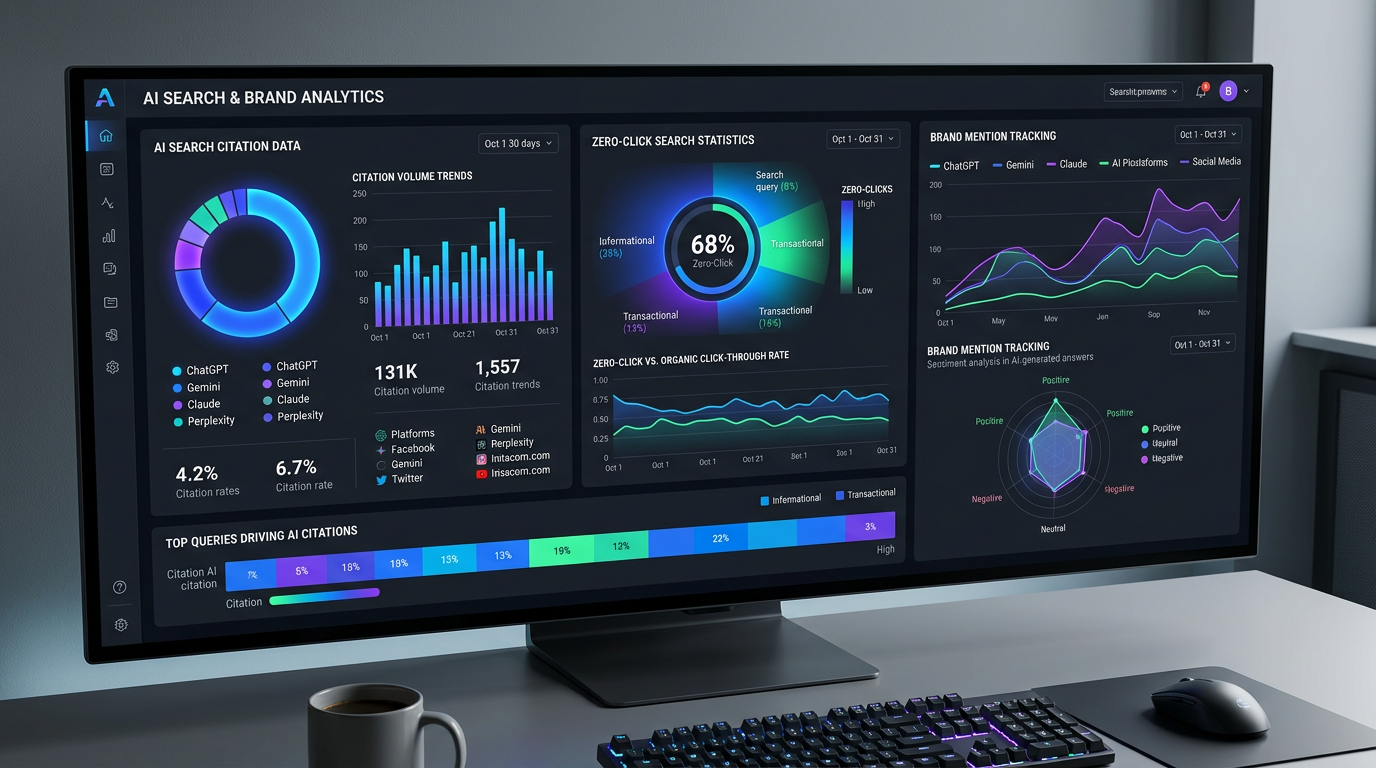
These statistics reveal both the challenge and the opportunity. Most websites are not optimized for AI citation — which means the first movers who get this right will capture disproportionate visibility.
The GEO Framework for Visual Content
Research analyzing 10,000 real-world queries found that pages with structured lists, quotes, and statistics had 30–40% higher visibility in AI responses. Here's how to apply these findings specifically to AI-generated visual content.
1. Structure Content for Machine Consumption
AI search engines parse your content differently than human readers. They need:
- Clear H2/H3 hierarchies where each section answers a standalone question
- Direct, concise answers within the first paragraph of each section
- Bullet points and numbered lists for process-oriented content
- Tables for comparisons and specifications
- Blockquotes for key insights and quotable statements
For visual content specifically, this means:
## How to Create AI Product Photography

The most effective approach to AI product photography in 2026 combines
reference images with structured prompts:

1. Upload 3–5 product photos as reference images
2. Define the scene context (studio, lifestyle, seasonal)
3. Set resolution and aspect ratio for the target platform
4. Generate 10–20 variations and curate the top 3
5. Apply brand-consistent color grading and export

> **Result:** Teams using this workflow produce campaign-ready
> product shots in 15 minutes vs. 2–3 hours with traditional photography.
This structure makes it easy for an LLM to extract, summarize, and cite your process.
2. Implement Schema Markup for Visual Assets
Structured data is not optional for GEO. Google AI Overviews prioritize content with schema markup. For visual AI content, implement:
- Article schema on every blog post and guide
- ImageObject schema on AI-generated images with descriptions, creation method, and licensing info
- VideoObject schema on AI-generated videos with duration, description, and thumbnail
- HowTo schema on workflow guides and tutorials
- FAQPage schema on pages that answer common questions about AI image/video generation
- Organization schema on your site to establish entity identity
3. Build Entity Authority
LLMs heavily weigh third-party sources when choosing which domains to cite. Earned media — coverage, reviews, and industry mentions — directly impacts your GEO visibility.
For visual AI creators, entity authority comes from:
- Getting featured in industry publications writing about AI creative tools
- Contributing to open-source projects or community resources in the AI/creative space
- Publishing original research with proprietary data (benchmarks, comparisons, case studies)
- Building a consistent presence across platforms where AI crawlers aggregate information
- Receiving natural backlinks from other creators who reference your workflows
4. Adopt the llms.txt Protocol
The llms.txt protocol is a curated index file — placed at your domain root — that guides AI crawlers to Markdown-formatted versions of your key content. It reduces ingestion friction and improves citation accuracy.
Fewer than 1% of websites have adopted this standard. For AI-focused sites, early adoption creates a significant competitive advantage.
A basic llms.txt file for a visual AI content site might include:
# MySite

> AI-powered creative platform for image and video generation

## Documentation
- [AI Image Generation Guide](/docs/image-generation.md)
- [Video Production Workflow](/docs/video-workflow.md)
- [Model Comparison Chart](/docs/model-comparison.md)

## Blog Posts
- [Best AI Image Generators 2026](/blog/best-generators.md)
- [How to Create Product Photography with AI](/blog/product-photography.md)
5. Don't Block AI Crawlers
Many sites unknowingly block AI crawlers in their robots.txt. Check that you're not blocking:
- GPTBot (OpenAI / ChatGPT)
- ClaudeBot (Anthropic / Claude)
- PerplexityBot (Perplexity AI)
- Google-Extended (Google AI features)
If you want your visual content cited by AI search engines, these bots need access to your pages.
GEO Strategies Specific to AI Visual Content

Make Your Images and Videos Findable
AI search engines can't "see" your images the way humans do. They rely on:
- Descriptive file names:
ai-product-photography-studio-lighting.jpgbeatsIMG_0042.jpg - Detailed alt text: Describe not just what the image shows, but how it was created and its purpose
- Contextual captions: Place images within explanatory content, not in standalone galleries
- Metadata in the page: Surround visual assets with text that explains the creation process, tools used, and intended application
Publish Process-Oriented Content
AI search engines favor content that teaches a process rather than simply showcasing results. Instead of "Here are 50 AI-generated landscapes," publish "How to generate photorealistic landscapes with AI: a step-by-step guide" that includes:
- Specific model and tool recommendations
- Prompt engineering techniques
- Before/after comparisons
- Quality assessment criteria
- Real production time estimates
Create Quotable, Citable Statistics
LLMs love data. When you publish original benchmarks, comparisons, or survey results, AI systems are more likely to cite your content. Examples:
- "AI product photography reduces shoot costs by 73% for e-commerce brands"
- "Teams using workflow automation produce 4.2x more visual content per sprint"
- "The average AI-generated video takes 8 minutes from prompt to final export at 4K resolution"
These become citation magnets when AI systems answer questions about AI content creation efficiency.
Leverage Your Creative Platform
Platforms that integrate AI generation with structured workflows create naturally GEO-optimized output. When you use XainFlow's workflow system, every generated asset automatically includes:
- Structured metadata and generation parameters
- Consistent naming conventions and organization
- Quality gates that ensure only polished content gets published
- Integration with content management systems that apply proper schema markup
This isn't about gaming AI search engines — it's about producing well-organized, well-documented creative work that AI systems can understand, trust, and recommend.
Measuring GEO Performance
Traditional SEO metrics (rankings, organic clicks) don't fully capture GEO performance. Track these instead:
- Citation frequency: How often your brand or content appears in AI-generated answers. Tools like Profound, Otterly, and Rankeo track this.
- Share of voice in AI responses: Your citation frequency relative to competitors for target queries
- Sentiment accuracy: Whether AI systems describe your brand/content accurately
- AI-referred traffic: Visits from users who clicked a citation in an AI-generated answer (appears as referral traffic from chat.openai.com, perplexity.ai, etc.)
- Brand mention volume: Track mentions across AI platforms using brand monitoring tools
The Audit Checklist
Run this quarterly:
- Search for your brand name in ChatGPT, Perplexity, and Google AI Overviews — are you being cited?
- Search for your primary keywords — which competitors appear and why?
- Check robots.txt for blocked AI crawlers
- Verify schema markup is properly implemented on key pages
- Review your content structure for machine readability
- Assess third-party mentions and earned media coverage
- Check if your llms.txt file is up to date
GEO Is Not a Replacement for SEO — It's an Extension
Many GEO tactics overlap with traditional SEO best practices: structured content, schema markup, authority building, and quality signals. The difference is in the intent and the audience.
SEO optimizes for Google's ranking algorithm to earn clicks. GEO optimizes for AI language models to earn citations. The most effective strategy does both simultaneously:
- Write content that ranks well in traditional search and is structured for AI citation
- Build authority signals that boost PageRank and LLM trust
- Use schema markup that improves rich snippets and AI parsing
- Create original research that earns backlinks and gets quoted by AI systems
"The best GEO strategy in 2026 is to create genuinely excellent content with impeccable structure. The search engines — both traditional and AI-powered — will follow."
Key Takeaways for Visual AI Creators
- 80%+ of searches now end without a click. If your content isn't being cited by AI, it's increasingly invisible.
- Structure your content for machines: clear headings, direct answers, bullet points, tables, and schema markup.
- Build entity authority: earned media, original research, and consistent brand presence make you citable.
- Adopt llms.txt early: fewer than 1% of sites have it. First-mover advantage is real.
- Don't block AI crawlers: GPTBot, ClaudeBot, PerplexityBot all need access to cite your content.
- Measure citations, not just clicks: the new metric is how often AI recommends your content.
- Use workflow platforms that produce metadata-rich, well-structured content by default — not as an afterthought.
The shift from search to AI-powered discovery is not coming — it's already here. The visual creators who adapt their content strategy now will be the ones AI systems recommend tomorrow.